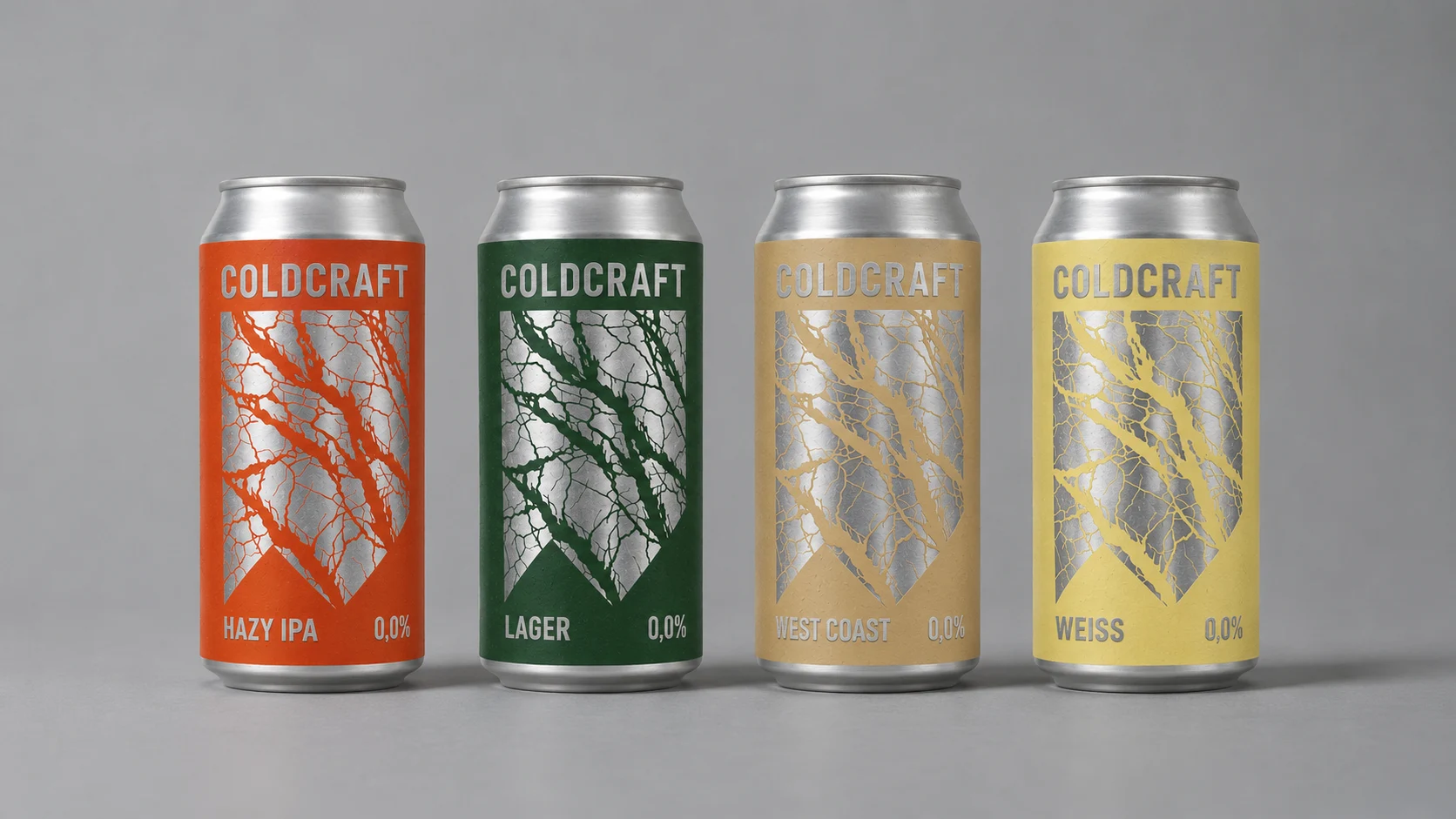
Start with the whole drink.
Hop aroma gets noticed first, but malt, bitterness, body and carbonation decide how a beer drinks. We develop those parts together. Prepared malt ingredients form the base, with hop ingredients and aroma blends adjusted for each of our four styles.
What cold blending changes.
We blend those ingredients with water at low temperature. It gives us a route to alcohol-free formulation without first producing a conventional alcoholic beer for dealcoholisation. The malt and hop ingredients have already gone through their own production processes before they reach the mixing tank.
There is still work at the brewery.
Tanks and pipes need cleaning. The drink needs mixing, chilling and packaging. Product stability needs to be checked and the appropriate treatment selected. Cold blending changes the process; those practical jobs remain part of making a finished can.
Follow the energy and the water.
Heating and boiling wort are substantial jobs in a conventional brewhouse. Blending can change that demand at the final production site, but ingredient manufacture also belongs in the wider assessment. Water depends heavily on cleaning, rinsing and reuse. An efficient brewery can use less water than a simple blending setup.
Try the numbers yourself.
Our Method page compares equal volumes using published brewery references and an example cold-process budget. You can change the inputs, switch references and download the calculation. Energy, water and the CO₂ associated with the energy supply are shown separately, including cases where use increases.
The next step is measurement.
Through the COLD Innowwide project, Ofrälse and Urban Artifact are examining the process, taste and practical US market application. Pilot data on fuel, electricity, incoming water, cleaning cycles and packaged output will give us a better picture of what happens at the plant.